 Chat cu Clara AI

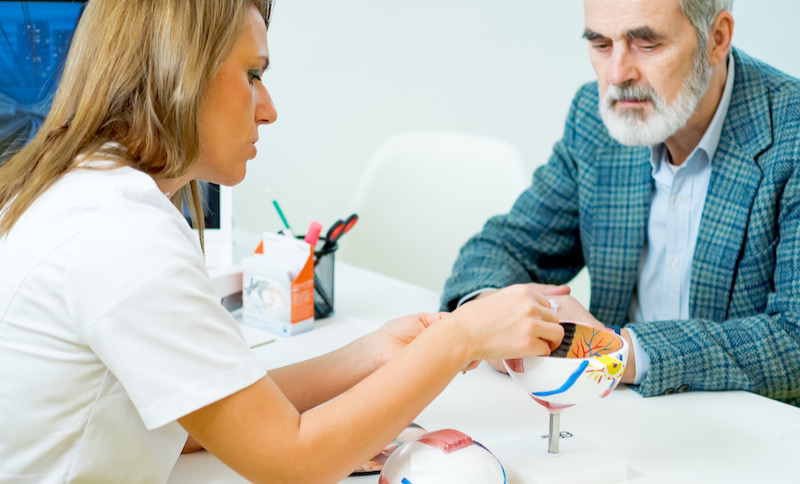
What is a Cataract?
Cataract is a condition of the crystalline lens (the lens inside the eye) that loses its transparency and becomes opaque. The opacification of the lens results in progressive vision loss, which can eventually lead to blindness.
Causes of Cataracts
Primary cataract (senile cataract) occurs when lens opacification develops gradually. It appears at an advanced age (usually after 60 years) and is the most common type of cataract encountered in ophthalmological practice.
Secondary cataract may occur following other eye or general conditions:
- after eye trauma;
- following long-term treatments (such as: corticosteroids, phenothiazines, amiodarone, busulfan, radiation);
- cataracts that appear more frequently in association with certain general diseases - pathological cataract (such as diabetes mellitus, Wilson's disease, atopic dermatitis, neurofibromatosis type 2, tetany);
- in certain pre-existing eye conditions – complicated cataract (such as myopia, glaucoma, chronic recurrent uveitis, pseudoexfoliation syndrome, retinal detachment) or cataract appearing after eye surgery (posterior vitrectomy, internal silicone oil tamponade).
Types of Cataracts
There are several classification criteria:
- by time of onset: cataract can be congenital (from birth) or acquired (during life);
- by etiology: there is primary (senile) cataract and secondary cataract (in people with chronic general or eye diseases);
- by location: it can be cortical, nuclear and posterior subcapsular cataract;
- by progression stage, cataract can be: incipient, intumescent, mature or hypermature.
Signs and Symptoms of Cataracts
The characteristic symptom of cataract onset is decreased vision (patients describe it as "fog"). This 'fog' progressively worsens, sometimes patients consulting an ophthalmologist quite late, when the degree of lens opacification is very advanced. Other symptoms that a cataract patient may experience include:
- Difficulty seeing at night
- Halos around light sources
- Faded color perception
- Need for frequent glasses changes (prescription changes)
Senile (age-related) cataract usually appears gradually, first in one eye, or more advanced in one eye and less advanced in the other. This is why patients often arrive late for an ophthalmological consultation.
Cataract Diagnosis
Cataract diagnosis is made by the ophthalmologist through slit-lamp biomicroscopy examination. Lens opacities are observed, and decreased visual acuity is detected through chart testing. This decrease cannot be corrected with glasses.
Only a doctor can assess the cause of vision loss (which can also be caused by other eye conditions affecting the retina, optic nerve, or cornea). Through a complete ophthalmological examination of both eyes, the cataract diagnosis is established, the degree of progression is determined, and the optimal time for cataract surgery can be indicated.
Treatment: Cataract Surgery
Cataract treatment is strictly surgical through cataract surgery.
Cataracts are operated one at a time, with priority usually given to the eye with lower visual acuity.
Cataract surgery is a common procedure and takes less than 30 minutes. The modern surgical technique uses ultrasound, with the opacified lens extracted through phacoemulsification, followed by artificial lens implantation.
The artificial lens is chosen by the surgeon together with the patient, depending on associated eye conditions and the patient's specific needs. There are 2 major categories of artificial lenses: monofocal (with different properties and filters) and multifocal (bifocal, trifocal, EDOF).
Ocular biometry is a test performed preoperatively; it measures the size and shape of the eye and helps correctly determine the power and type of artificial lens to be implanted during surgery.
Very importantly, the surgery is performed on an outpatient basis, and the patient is awake during the operation. Anesthesia is local, with anesthetic drops or periocular injection; general anesthesia is necessary for cataract surgery in children.
Types of Artificial Lenses
Modern artificial lenses are foldable, inserted into the eye through a small incision that requires no sutures, thus ensuring easy healing. Rigid lenses were used in the past or are still used today in certain situations (e.g., very advanced cataracts that cannot be removed by ultrasound).
Depending on the material they are made of, foldable lenses can be made of silicone or acrylic (hydrophilic acrylic or hydrophobic acrylic). The latter are very easy to fold and are superior to hydrophilic ones due to the reduced percentage of secondary cataract occurrence.
Depending on optical properties, foldable lenses can be:
- monofocal - with equal power across all zones, producing excellent distance vision, with reading glasses needed afterward;
- multifocal - adapted for distance vision as well as intermediate and near zones, patients no longer need glasses postoperatively;
- EDOF - offers the best quality of distance and intermediate vision and ensures maximum depth of visual field;
- toric - corrects the patient's astigmatism.
Most foldable lenses have a UV filter, some may also have a blue light filter. The choice of artificial lens is determined at the preoperative consultation, depending on the eye's health condition and the patient's wishes.
Who is Cataract Surgery For?
Untreated cataracts can eventually lead, after a generally slow progression, to blindness. However, they rarely constitute a surgical emergency, and only periodic check-ups can determine when intervention is needed.
Usually, when vision loss from cataracts leads to decreased quality of life, making ordinary things difficult (driving, reading, watching television) or affects the level of independence, the ophthalmologist will recommend cataract surgery.
Cataract Surgery Results
In most cases (over 95% of situations), significant vision improvement is achieved after surgery. It is important to know that the visual result of surgery is also related to the pre-existence of other eye conditions. After cataract removal, vision quality will improve, but will significantly depend on the previous health condition of the cornea, retina and optic nerve.
Secondary Cataract
In 20-30% of cataract surgery patients, between a few months and several years after the procedure, vision may decrease due to what is called "secondary cataract" (posterior capsule opacification syndrome). This is not a complication of the surgery. It does not affect the artificial lens and occurs due to fibrosis of the lens capsule.
Resolution of this situation is done through an in-office laser procedure, painless, quick (not a reoperation in the operating room) and which leads to restoration of vision, as it was after cataract surgery. After this procedure, the patient will administer eye drops at home for a few days.
Can Cataracts Be Prevented?
There are no scientifically proven methods to prevent the onset and progression of cataracts. However, there are some ways to prevent early cataract development:
- Wearing quality sunglasses to protect eyes from ultraviolet rays
- Quitting smoking
- Managing overall health (e.g., diabetes control)
- Balanced diet
Prevention of senile cataract is better achieved through regular check-ups with the ophthalmologist. This way, the diagnosis is established and disease progression is monitored. Surgery at the optimal time ensures excellent healing. Patients should not wait until significant vision loss occurs. The more opaque the lens becomes (i.e., the more advanced the cataract), the greater the intra and postoperative risks.
Frequently Asked Questions
A cataract is a condition of the crystalline lens (the lens inside the eye) that loses its transparency and becomes opaque. The opacification of the lens results in progressive vision loss.
Cataract treatment is strictly surgical through cataract surgery. The modern technique is performed using ultrasound, through phacoemulsification, followed by artificial lens implantation.
In 20-30% of operated patients, vision may decrease due to posterior capsule opacification. This is resolved through an in-office laser procedure, painless and quick.
