 Chat cu Clara AI

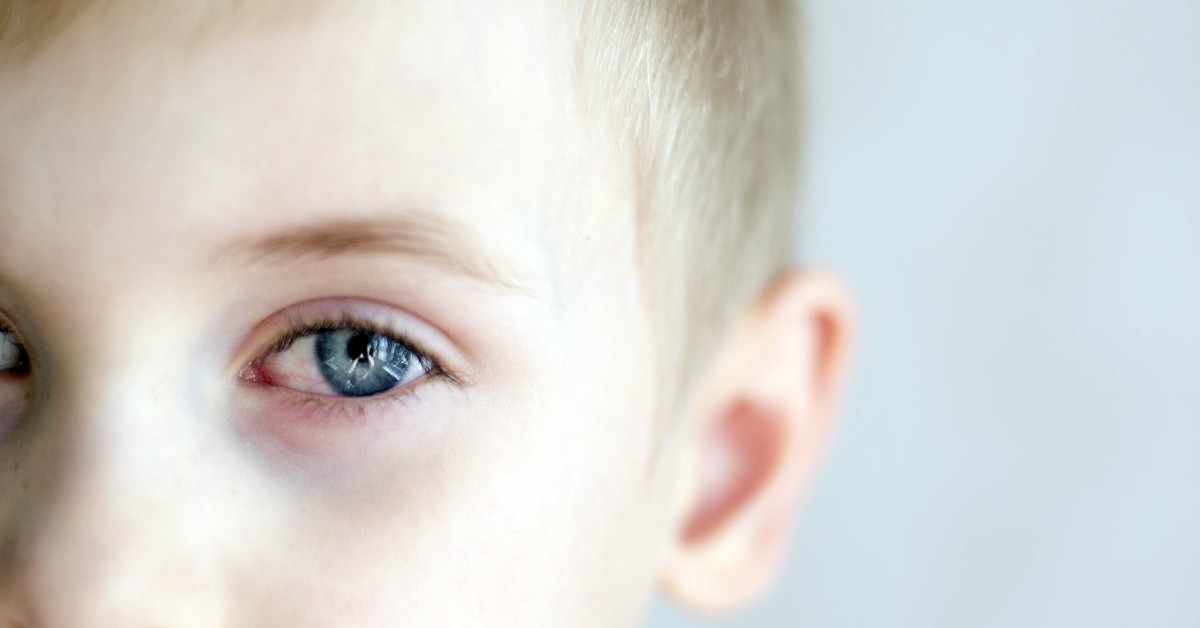
Conjunctivitis is a condition frequently encountered in children. Whether it is of viral, allergic or bacterial origin, conjunctivitis differs from other eye conditions by the reddening of the white part of the eye (respectively the conjunctiva).
Conjunctivitis in Children – Signs of Onset
Inflammation of the conjunctiva thus leads to a rather noisy clinical picture that alarms the parent who presents quite quickly with the child to the ophthalmologist. The child may present one or both eyes red, watery, with light sensitivity, itching, conjunctival discharge, foreign body sensation, even pain. Sometimes, conjunctivitis is associated with eyelid edema (eyelid swelling), and other times with keratitis (corneal inflammation), which practically represents a factor that complicates conjunctivitis, prolonging healing time, sometimes with vision decrease.
Types of Conjunctivitis in Children According to Cause
Conjunctivitis in children has various causes, depending on the incriminated agent. The most common can be:
Allergic
It is encountered especially in children with allergic history to dust, mites, plants, animal hair or various other factors that can be found through specific allergy tests done in analysis laboratories.
Allergic conjunctivitis in children manifests as slight reddening of the conjunctiva, the predominant symptom being itching in the ocular area, which most often is bilateral. Also, hyperlacrimation may occur (eyes that 'run' or tear abundantly, with tears running down the cheek, and, therefore, vision cloudiness).
Viral (caused by various viruses)
In the case of viral conjunctivitis, the eyes are very red, also watery, and the child usually presents photophobia (excessive light sensitivity).
Bacterial
The specific clinical picture, besides conjunctival reddening, is given by the presence of viscous or mucous secretions, white, yellow, green, etc., depending on the etiology (in which it is good to recommend an antibiogram for targeted antibiotic treatment, for a rapid effect).
It should be noted that in newborns, conjunctivitis can 'betray' a blockage of the lacrimal ducts, thus another possible triggering factor compared to those listed above, another reason to go to an ophthalmologic consultation when a red eye with secretions appears.
In general, conjunctivitis is contagious, spreading easily from one family member to another. Presentation to the pediatric ophthalmologist as soon as possible is indicated for appropriate treatment, but also avoiding the use of shared linens by the family, transmission through secretions to those close by through personal items being very probable (so be careful about using towels, bed linens, personal hygiene products). Also, rigorous hand hygiene is necessary (another way of easily transmitting eye secretions).
Treatment for Conjunctivitis in Children
Treatment of conjunctivitis in children is done after careful analysis with the biomicroscope and a correctly conducted medical history between doctor-patient (parent).
Treatment for Allergic Conjunctivitis
- antiallergic drops
- artificial tears
- antiallergic syrups given for a limited time
Treatment for Viral Conjunctivitis
- vitamins administered orally
- artificial tears locally
If corneal complications occur (so-called viral keratoconjunctivitis), treatment becomes more extensive, with frequent monitoring of evolution, the risk being long-term vision impairment, sometimes irreversible.
Treatment for Bacterial Conjunctivitis
- local antibiotic, targeted at the bacteria that caused the disease
Also, anti-inflammatory drops may be recommended, separately or in combinations with antibiotics.
The sooner you consult the ophthalmologist in case of conjunctivitis in children, the faster the condition, regardless of etiology, will be resolved, avoiding possible subsequent complications.
Frequently Asked Questions
Red, watery eyes, light sensitivity, itching, conjunctival discharge, foreign body sensation, even pain. Sometimes eyelid swelling or keratitis.
Yes, conjunctivitis is contagious, spreading easily. Rigorous hand hygiene is necessary and sharing linens should be avoided.
Treatment depends on the cause: antiallergic drops for allergic conjunctivitis, vitamins and artificial tears for viral, local antibiotic for bacterial.
