 Chat cu Clara AI

What Do We Mean by Amblyopia?
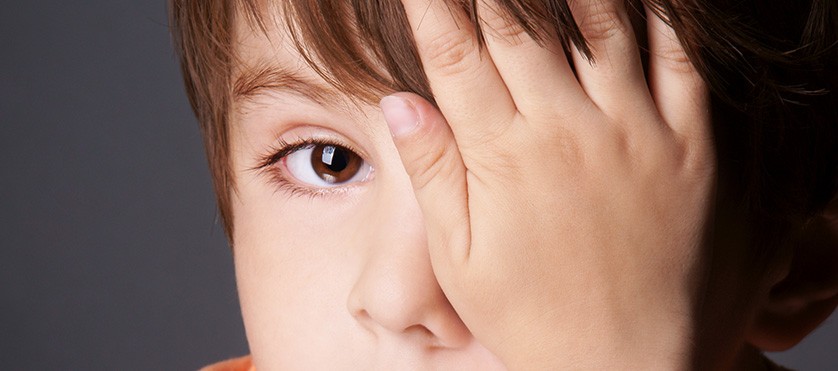
By amblyopia (lazy eye) we mean reduced vision in one, or more rarely, in both eyes. This deficient vision should not be caused by an organic eye disease.
What Are the Causes of Amblyopia?
Amblyopia occurs when one eye is not used enough, either because it is deviated (in strabismus), or because it has a higher diopter compared to the fellow eye (in anisometropia). In strabismus, the brain receives two images from the two eyes that do not overlap; to avoid double vision (diplopia), the image from the strabismic eye is ignored, with the brain using the image from the other eye; the vision of the deviated eye progressively decreases if corrective measures are not taken.
In situations where there is a diopter difference between the two eyes, the images reaching the brain will be different (one clear from the eye with smaller diopter, and one unclear from the eye with larger diopter). The superimposition of these images at the central level is bothersome, so the brain suppresses the unclear image, thus establishing amblyopia.
There are also situations of bilateral amblyopia, when both eyes have large refractive errors (hyperopia >5D, myopia >10D, astigmatism >3D). We speak of deprivation amblyopia when there is an obstacle on the visual axis (congenital cataract, corneal leukoma, palpebral ptosis, etc.). Organic amblyopia represents reduced vision when there are congenital or acquired lesions at the retinal or optic nerve level.
Is It Dangerous? Can It Be Treated?
Depending on how reduced visual acuity is, amblyopia can be mild, moderate, or severe.
Normal binocular vision develops during the preschool period, so any imbalance that occurs in the functioning of the two eyes up to this age can negatively influence vision development. The earlier the imbalance occurs, the more severe the effects. The later treatment is started, the more difficult recovery becomes.
First of all, it is necessary to correct any existing refractive error by wearing appropriate optical correction (glasses or contact lenses). Then the amblyopia therapy process should begin as soon as possible, which consists of visual stimulation of the "lazy" eye by occluding (covering) the healthy eye.
The occlusion rhythm (number of hours/day) and the duration of this treatment vary depending on the degree of amblyopia and the child's age. The younger the child, the better the results of amblyopia therapy (in young children, total occlusion can lead to vision recovery in a few weeks). After age 7, partial occlusion (a few hours per day) can extend over a year, and results are weaker. After age 9, vision recovery becomes almost impossible, although there are cases where amblyopia therapy has produced results.
In some situations, surgical interventions can be considered to clear the visual axis (in case of congenital cataract, ptosis, etc.) or to correct large strabismic deviation (to align the axes of the 2 eyes). These interventions do not exclude wearing appropriate optical correction, occlusion, and periodic postoperative checkups.
When Should Parents Take Their Child to the Ophthalmologist?
Usually, when there is a visible strabismic deviation in the young child or when there is a family history of eye conditions, parents request an ophthalmologic consultation from a few months of age. With the PlusoptiX device, there is the possibility of early detection of vision disorders in children, even from 6 months of age. The measurement is free of discomfort for both the child and the parent and examiner.
PlusoptiX A12
It simultaneously (binocularly) measures the refraction of both eyes from a distance of approximately 1 m in a few milliseconds, providing exact values of diopter values (sphere, cylinder, axis) of both eyes; fixation angle (strabismus); pupil diameter.
In anisometropia, parents do not notice anything unusual in the child. In many situations, the child accidentally discovers at school age that they see poorly with one eye. At this point, things are already delayed, since vision recovery in the amblyopic eye should be done before age 7. The earlier the amblyopia therapy process begins, the better the visual recovery.
Therefore, it is very important that the first ophthalmologic checkup in young children be done between 6 months and 1 year, then at 3 years and before going to school, at age 5. Early detection of vision defects and their adequate treatment can ensure normal vision development for the child.
Frequently Asked Questions
Amblyopia (lazy eye) is reduced vision in one or both eyes that is not caused by an organic eye disease.
Amblyopia occurs when one eye is not used enough: in strabismus (deviated eye), in anisometropia (different diopter between eyes), or when there is an obstacle on the visual axis (congenital cataract, ptosis).
Yes, through optical correction (glasses) and amblyopia therapy (occlusion of the healthy eye). The earlier treatment begins, the better the results. After age 9, recovery becomes almost impossible.
First checkup between 6 months and 1 year, then at 3 years and at 5 years (before school). Early detection ensures normal vision development.
