
One procedure, for life
The artificial lens does not wear out and does not age. The correction of your prescription remains stable for the rest of your life.
Cataract can never develop
Cataract only affects the natural crystalline lens. Once it has been replaced, you will never need cataract surgery.
Works where laser cannot
Corrects high prescriptions, presbyopia and astigmatism, including for thin corneas or other contraindications to laser surgery.

Quick answers to any question
Clara, our AI medical advisor, replies within seconds, around the clock.
Lens exchange, in short
The restaurant menu, messages on your phone, the leaflet inside a medicine box — if you keep holding them further and further away to read them, your crystalline lens has lost its elasticity. This is the eye's natural lens: around age 45 presbyopia sets in, along with dependence on reading glasses, and over time the lens begins to cloud over, turning into a cataract.
The procedure is also called refractive lens implant surgery — internationally RLE (Refractive Lens Exchange), clear lens extraction (CLE) or, for presbyopia, PRELEX. The natural lens is replaced with a premium artificial lens — technically called an intraocular lens (IOL) — calculated to the millimetre for your eye. It simultaneously corrects your distance prescription, astigmatism and presbyopia. In practice, you get your own best vision — the one you had with fully corrected glasses — but without the glasses. Surgery removes your dependence on them; it cannot add sharpness beyond what your retina and optic nerve can deliver.
Technically, the procedure is identical to cataract surgery — the most frequently performed operation in the world — with one difference: the lens being replaced is still clear, and the goal is freedom from glasses, not the treatment of a disease.
It is the preferred solution after 45-50, when corneal laser procedures no longer deliver a complete result or are no longer advisable.
Same surgery, different purpose
| Cataract surgery | clouded lens → replaced for medical reasons |
| Refractive exchange | clear lens → replaced to get rid of glasses |
Already have a cataract? See our dedicated cataract surgery page.
Recommendations and contraindications
Who it suits
- People over 45-50 with presbyopia who want independence from glasses at all distances
- High hyperopia (over +4 dioptres), where laser is no longer advisable
- Prescriptions beyond the limits of laser surgery, or thin corneas
- Early cataract — you fix your prescription and prevent a future operation
Who it does NOT suit
- An unstable prescription (your refraction must be constant)
- Active retinal disease: macular degeneration, diabetic retinopathy
- Uncontrolled glaucoma, recurrent uveitis
- Unrealistic expectations — vision after surgery will not exceed your best corrected vision with glasses before it; we correct your prescription, we do not build a new eye
High myopia and under 50?
In highly myopic eyes, the risk of retinal detachment after lens exchange is significantly higher than in other patients. In these cases we first look at the alternatives (laser surgery, phakic lenses) and always perform a thorough retinal examination. The decision is made individually, together with your surgeon, only after the evaluation consultation. Our rule is simple: if another procedure gives you a safer result, that is what we recommend — and if you are not a candidate for any of them, we tell you openly. An honest refusal is also a medical service.
Laser or lens exchange? What suits you
Clario offers the full spectrum of vision correction — the choice depends on your age, your prescription and the condition of your eyes.
| Criteria | Laser (Smile PRO, LASIK, PRK) | Presbyond | Lens exchange |
|---|---|---|---|
| Typical age | 18-40 years | 40-55 years | over 45-50 years |
| Corrects | myopia, hyperopia, astigmatism | the same + presbyopia (blended vision) | any prescription + presbyopia + astigmatism |
| Prescription limits | within the limits of corneal thickness | within the limits of corneal thickness | virtually no limits |
| Cataract in the future | possible, at the usual age | possible, at the usual age | permanently ruled out |
| Recovery | 1-2 days (Smile PRO, LASIK) | 1-2 days | a few days; full adaptation 1-3 months |
| Price per eye | 7,900 RON | 9,800 RON | 9,800 RON |
Not sure which one is right for you? You do not have to decide alone: the evaluation consultation is the same for all procedures, and the surgeon tells you exactly which one fits. Book your evaluation →
Types of premium artificial lenses
We use Alcon, ZEISS and Johnson & Johnson artificial lenses — together we choose the model that fits your lifestyle.
Maximum clarity at distance
- Excellent optical quality
- No halos or glare
- Reading glasses still needed
- e.g. Alcon Clareon
Ideal for: frequent night driving, sensitivity to halos
Distance and intermediate
- Continuous vision from far to computer distance
- Minimal halos and glare
- Very small print may require glasses
- e.g. Alcon Vivity, ZEISS AT LARA, Tecnis PureSee
Ideal for: office work and driving, with minimal compromise
Complete independence
- Near, intermediate and distance
- ~9 in 10 patients give up glasses completely
- Possible night halos at first
- e.g. Alcon PanOptix, ZEISS AT LISA tri
Ideal for: those who want total freedom
For astigmatism
- Also corrects astigmatism
- Available in monofocal, EDOF and trifocal versions
- Precision positioning during surgery
Ideal for: astigmatism over 1 dioptre
How we choose the right artificial lens
The choice is not made from a catalogue, but based on: your lifestyle (night driving, computer work, reading), the biometric measurements of your eye, your personality (how bothersome you would find halos) and your medical history. The price of the surgery is the same whichever artificial lens you choose — our recommendation is never driven by cost.
The surgery, step by step
The complete ophthalmological evaluation determines whether lens exchange is the right procedure for you, or whether a better option exists (laser, Presbyond). We talk about your lifestyle and your expectations.
Duration: 60-90 minutes, with pupil dilation.
The power of the artificial lens is calculated with millimetre precision through optical biometry — exact measurement of the eye's length and curvatures. We then check the health of the cornea (specular microscopy, corneal topography) and of the retina and optic nerve (OCT scan). A careful examination of the retina is mandatory before surgery.
If needed, an ocular ultrasound or a visual field test is added, along with the usual general blood tests. Important: if you wear contact lenses, stop wearing them before the measurements — at least 7 days for soft lenses and 2-3 weeks for rigid ones — otherwise the cornea's shape is temporarily distorted and the artificial lens calculation loses precision.
Based on the measurements and the conversation about your lifestyle, the surgeon recommends the type of artificial lens: monofocal, extended depth of focus, trifocal or toric. You receive clear explanations about the advantages and the trade-offs of each.
Under anaesthesia with eye drops only, the natural lens is fragmented with ultrasound and aspirated (a procedure called phacoemulsification), through an incision of about 2.2 mm, and the chosen artificial lens is implanted. No injections, no stitches, no hospital stay.
Important: the second eye is operated on 1-2 weeks later, for safety.
Day 1: included check-up; for most patients vision is already much improved — for some, full clarity comes within a few days as the cornea clears. First week: drops as prescribed, included check-up; do not rub your eyes and keep them away from dust and water. Weeks 2-6: usual activities resume gradually.
Specifically: eye make-up after 2 weeks, swimming pool, sea and sauna after 4 weeks, intense sport and heavy lifting after 4-6 weeks; rubbing your eyes — gently, and only after the first month. Showering and washing your hair are fine from day one, taking care that water and soap do not get directly into your eyes.
With trifocal and extended depth of focus artificial lenses, the brain learns to use the new optical system — neuroadaptation takes from a few weeks to 1-3 months.
Key facts
- Anaesthesia with eye drops only
- No hospital stay — you go home the same day
- ~2.2 mm incision, no stitches
- Second eye after 1-2 weeks
- Check-ups at 1 day and 1 week included
The risks of lens exchange surgery — the real numbers
This procedure has a very good safety profile, but like any surgery it carries risks. We would rather tell you about them ourselves, with figures from international studies, than have you discover them elsewhere.
| Risk | Frequency | What we do about it |
|---|---|---|
| Intraocular infection (endophthalmitis) | under 1 in 1,000 | strict sterile protocol and an antibiotic administered during surgery |
| Retinal detachment | rare in hyperopic patients and over 50; significantly more frequent in high myopia | mandatory retinal examination before surgery; careful candidate selection; treatable if caught early |
| Macular oedema (retina) | 1-2%, usually temporary | check-ups at 1 day and 1 week; responds to treatment |
| Posterior capsule opacification (secondary cataract) | ~1 in 10 patients, over the years | resolved permanently in a few minutes, as an outpatient, with YAG laser |
| Residual prescription (result slightly under or over target) | uncommon; more likely in eyes with previous laser surgery or very high prescriptions | precision optical biometry and modern calculation formulas; if a bothersome prescription remains, it can be corrected later (laser touch-up or, rarely, exchanging the artificial lens) |
| Lens decentration or a change of the planned model | very rare | we assess the capsular support before surgery; if needed, the surgeon safely implants the most suitable alternative model and we openly explain the next steps |
| Night halos and glare | common at first with trifocal artificial lenses | fade through neuroadaptation within 1-3 months; we also choose your artificial lens based on your sensitivity |
Complete pre-operative evaluation including retinal examination • rigorous candidate selection — if another procedure suits you better, that is what we recommend • Alcon Centurion phacoemulsifier and high-precision optical biometry • standardised antibiotic prophylaxis protocol • included check-ups and careful post-operative follow-up.
Find out in 2 minutes if you can live without glasses
A few questions about your age, prescription and lifestyle — you get your matching options on the spot.
Start the self-assessmentOur patients' stories
Refractive lens exchange is technically identical to cataract surgery: the same surgeons, the same artificial lenses, the same operating theatre. Here is what patients treated at Clario say.
 NOU





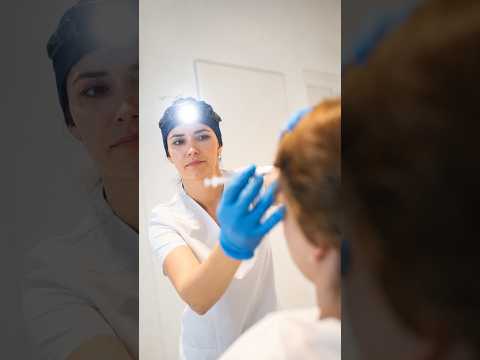


The joy of seeing after cataract surgery at 90+ years old
"I see certain things too well that maybe I would not want to see."
Clario Patient

Cataract and modern treatment methods / TVR1
"All the details about evaluation and cataract surgery."
Dr. Silvia Chiotoroiu

When should cataract be operated?
"Cataract stages and the right time for surgery"
Dr. Liana Duta


The medical team.
The stages of the procedure.
The refractive evaluation consultation and investigations.
The complete refractive evaluation is performed by the doctors of our refractive surgery team — trained at the London Vision Clinic (Harley Street, London), the clinic of Prof. Dan Reinstein, inventor of the PRESBYOND procedure, where surgeons from around the world are trained. The results are reviewed together with the surgeon who will operate on you.
The lens exchange surgery
The procedure is performed by our surgeons specialised in lens surgery, using the Alcon Centurion phacoemulsifier — the same technology and the same experience behind the thousands of cataract surgeries performed at Clario.

Dr. Silvia Chiotoroiu
Senior Ophthalmologist, PhD in Medical Sciences
Refractive lens surgery, cataract surgery

Dr. Ruxandra Simionescu
Senior Ophthalmologist, PhD in Medical Sciences
Refractive lens surgery, cataract surgery
How much does lens exchange cost — transparent prices
Refractive Lens Exchange
The price of the surgery is the same whichever premium artificial lens you choose.
The surgery takes about 20 minutes. Our care takes much longer: the 1-day and 1-week check-ups are included, and the team remains available to you afterwards.
All of the clinic's fees are public — see the full price list.
The first step costs only 500 RON — the evaluation. You decide about surgery only after finding out whether you are a candidate and which artificial lens suits you.
Book your evaluation consultationFrequently asked questions about lens exchange
Technically, the procedure is identical — the same instruments, the same surgeons, the same artificial lenses. The difference is the reason: in cataract surgery, the lens has clouded over and replacement is medically necessary; here the lens is still clear, and the goal is vision correction and freedom from glasses.
Yes. “Refractive lens implant”, “refractive lens exchange”, “clear lens extraction” or PRELEX are different names for the same operation: the natural lens is replaced with an artificial lens that corrects your prescription.
At Clario you do not pay separately for the artificial lens. The surgery costs 9,800 RON per eye and includes any premium artificial lens — monofocal, EDOF, trifocal or toric, from Alcon, ZEISS or Johnson & Johnson. You never pay extra for a particular model, so the surgeon's recommendation is not influenced by price. Together with the evaluation consultation (500 RON) and the investigations for both eyes (1,000 RON), the total for both eyes comes to 21,100 RON.
No, never. Cataract can only affect the natural crystalline lens. The artificial lens does not cloud over and does not degrade with time. The only related situation is opacification of the capsule that holds the artificial lens (in roughly 1 in 10 patients, after years) — it is resolved permanently in a few minutes, with a laser, without surgery.
It depends on the artificial lens you choose. With a trifocal artificial lens, roughly 9 in 10 patients stop using glasses altogether; some patients occasionally prefer glasses for very small print or prolonged reading. With an extended depth of focus artificial lens, distance and intermediate vision is excellent, but fine print may require glasses. With a monofocal artificial lens, reading glasses remain necessary. We never promise anyone “100% guaranteed freedom from glasses” — we tell you honestly what to expect, depending on the artificial lens you choose.
Laser reshapes the cornea and works excellently for moderate prescriptions and younger eyes. After 45-50, the problem moves inside the eye: the crystalline lens ages. Replacing it treats the cause — it corrects any prescription, resolves presbyopia and permanently eliminates the risk of cataract. For many patients between 40 and 55, however, the Presbyond laser alternative remains a very good fit — at the evaluation we tell you exactly which option is yours.
No. Anaesthesia is done with eye drops only — no injections. During the surgery you may feel slight pressure, but no pain. Any mild discomfort afterwards (a gritty sensation, watery eyes) settles within 1-2 days.
Vision is noticeably better within the first few days. Office work usually resumes within a few days, and driving as soon as your vision allows it (often within the first week). Intense sport and heavy lifting wait 4-6 weeks, swimming and sauna 4 weeks, eye make-up 2 weeks; avoid rubbing your eyes for the first month. With trifocal artificial lenses, peak visual quality is reached after neuroadaptation — from a few weeks to 1-3 months.
Halos are rings of light around light sources, visible mostly at night, and are typical of trifocal artificial lenses. They are normal at first and fade as the brain adapts, usually within 1-3 months. If you are particularly sensitive (for example, you drive a lot at night), we recommend an extended depth of focus or monofocal artificial lens from the start, which produces virtually none of these phenomena.
Serious risks are rare: intraocular infection occurs in fewer than 1 in 1,000 surgeries, and macular oedema (1-2%) is usually temporary and treatable. Retinal detachment is rare in hyperopic patients and those over 50, but significantly more frequent in high myopia — which is why a retinal examination is mandatory and, for young myopic patients, we often recommend a different procedure. The full details are in the risks section on this page and are discussed at your consultation.
Yes, in most cases. A laser-treated cornea changes the way the artificial lens power is calculated, which is why we use special biometry formulas for these eyes. It is important to tell us at the evaluation which procedures you have had.
The artificial lens can be exchanged for a different model in exceptional situations, but the natural lens cannot be put back. This is precisely why the evaluation, the conversation about expectations and the choice of artificial lens are done so carefully before surgery.
Medically reviewed content: Dr. Silvia Chiotoroiu — Senior Ophthalmologist, PhD in Medical Sciences. Updated: July 2026.
Sources: American Academy of Ophthalmology (AAO) — Refractive Lens Exchange; ESCRS — endophthalmitis prophylaxis study; EyeWiki — Clear Lens Extraction; meta-analyses on trifocal artificial lenses and posterior capsule opacification.
Find out if this is your solution
A single evaluation consultation tells you exactly what your options are — lens exchange, Presbyond or another procedure. We recommend what suits you, not what costs more.
Book your evaluation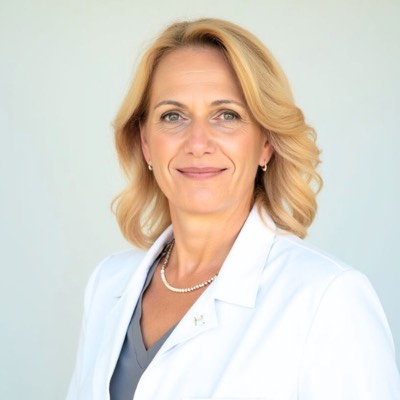
Dr. Monica Apostolescu
Founder of Clario · Ophthalmology Specialist
Over 20 years of experience in ophthalmology and super-specialization in laser refractive surgery. Full member of ASCRS and ESCRS.
See full profile & CVLast medically reviewed: June 2026
